

Private Bus Group Tour Easten UNESCO place in jeju island
233 activities · South Korea
Jeju, South Korea, has 233 activities, tours and experiences to book. Don't miss: Jeju National Museum, Samseonghyeol, Nexon Computer Museum, Jeju Sports Complex. Also worth exploring nearby: Jeju Island, Seogwipo.
01Things to do
Must-see places

Jeju National Museum
National museum

Samseonghyeol
Historic site

Nexon Computer Museum
Computer museum

Jeju Sports Complex
Stadium

Jejumok-Gwana
Place

Jeju Dongmun Traditional Market
Place
02Activities to book
The best experiences in Jeju
 Free cancellation
 Top pick
 Top pick
 Free cancellation
 Top pick
 Top pick
 Private tour
 Top pick
 Top pick
 Private tour
 Private tour
 Selling fast
03Explore nearby
Nearby cities


Popular activities · Jeju
 Private tour
 Bookable
 Private tour
 Free cancellation
 Private tour
 Private tour
 Selling fast
 Selling fast
 Selling fast
 Private tour
 Private tour
 Private tour
![[Jeju] Jeju K-Drama Hanbok Photoshoot & Private Guided Tour | voooya](/api/img?u=https%3A%2F%2Fmedia-cdn.tripadvisor.com%2Fmedia%2Fattractions-splice-spp-480x320%2Fr%2F33%2F9c%2Fa3%2F13%2Fcaption.jpg&w=480) Private tour
Private tour Private tour
 Private tour
 Private tour
 Private tour
 Free cancellation
 Private tour
 Private tour
 Private tour
 Free cancellation
 Private tour
 Private tour
 Private tour
 Free cancellation
 Private tour
 Private tour
 Private tour
 Private tour
 Private tour
 Selling fast
 Private tour
 Private tour
 Free cancellation
 Private tour
 Free cancellation
 Free cancellation
 Private tour
 Private tour
 Private tour
 Private tour
 Private tour
 Free cancellation
 Free cancellation
 Private tour
 Private tour
![[Jeju] Premium Hanbok Cultural Experience with Hair Styling | voooya](/api/img?u=https%3A%2F%2Fmedia-cdn.tripadvisor.com%2Fmedia%2Fattractions-splice-spp-400x400%2Fr%2F33%2F9c%2F5f%2Fc2%2Fcaption.jpg&w=480) Private tour
Private tour Private tour
 Private tour
 Private tour
 Private tour
 Private tour
 Selling fast
 Private tour
 Private tour
 Private tour
 Private tour
 Private tour
 Private tour
 Private tour
 Private tour
 Private tour
 Private tour
 Private tour
 Private tour
 Private tour
 Free cancellation
 Selling fast
 Private tour
 Private tour
 Private tour
 Private tour
 Private tour
 Private tour
![[Jeju] Devenez une expérience culturelle Haenyeo traditionnelle | voooya](/api/img?u=https%3A%2F%2Fmedia-cdn.tripadvisor.com%2Fmedia%2Fattractions-splice-spp-480x320%2Fr%2F33%2F9c%2F76%2F4f%2Fcaption.jpg&w=480) Private tour
Private tour![[Jeju] UNESCO Sea Women (Haenyeo) Photoshoot Experience | voooya](/api/img?u=https%3A%2F%2Fmedia-cdn.tripadvisor.com%2Fmedia%2Fattractions-splice-spp-480x320%2Fr%2F33%2F9c%2F80%2Fc9%2Fcaption.jpg&w=480) Private tour
Private tour Private tour
 Private tour
 Private tour
 Private tour
 Private tour
 Private tour
 Private tour
 Private tour
 Private tour
 Private tour
 Private tour
 Private tour
 Private tour
 Private tour
 Private tour
 Private tour
 Private tour
 Private tour
 Private tour
 Private tour
 Private tour
 Private tour
 Private tour
 Free cancellation
 Private tour
 Private tour
 Private tour
 Private tour
 Private tour
 Private tour
 Private tour
 Private tour
 Private tour
 Private tour
 Private tour
 Private tour
 Private tour
 Private tour
 Private tour
 Private tour
 Private tour
 Private tour
 Private tour
 Free cancellation
 Private tour
 Private tour
 Private tour
 Private tour
 Private tour
 Private tour
![[5-days Jeju] Private Customized Hiking(Hallasan & Olle Course) with Mountaineer | voooya](/api/img?u=https%3A%2F%2Fmedia-cdn.tripadvisor.com%2Fmedia%2Fattractions-splice-spp-400x400%2F07%2Fc2%2F82%2F3d.jpg&w=480) Private tour
Private tour Skip the line
![[Jeju Island] Customizable Private Taxi Tour | voooya](/api/img?u=https%3A%2F%2Fmedia-cdn.tripadvisor.com%2Fmedia%2Fattractions-splice-spp-400x400%2F09%2Fe2%2Ff6%2F2f.jpg&w=480) Private tour
Private tour Free cancellation
 Private tour
 Private tour
 Private tour
 Private tour
 Private tour
 Private tour
 Private tour
 Free cancellation
 Private tour
 Private tour
 Private tour
 Private tour
 Private tour
 Free cancellation
 Free cancellation
 Private tour
 Private tour
 Private tour
 Private tour
Frequently asked questions about Jeju
What is there to do in Jeju?
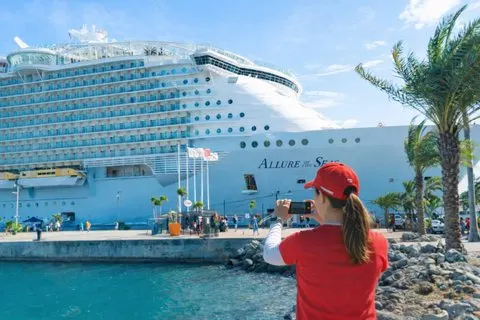
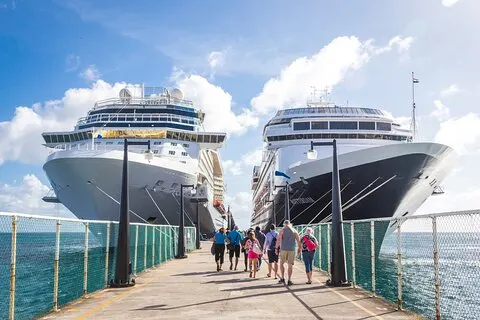
Jeju has 233 activities, tours and day trips you can book online. Among the most booked: « Jeju Shore Excursion for Cruise Passengers: UNESCO & Highlights », « Jeju East Essentials – Seongsan Ilchulbong (UNESCO) & Haenyeo », « Jeju Island Popular Sightseeing Private Car Charter Tour 5/9hours ».
What are the top-rated activities in Jeju?
According to traveller reviews: « Full Day 12 hours whole Jeju Island private flexible tour » (5.0/5, 32 reviews) ; « Jeju Customized Private Car Tour » (5.0/5, 23 reviews) ; « Jeju Shore Excursion for Cruise Passengers: UNESCO & Highlights » (5.0/5, 95 reviews).
What are the must-see places in Jeju?
Not to be missed in Jeju: Jeju National Museum, Samseonghyeol, Nexon Computer Museum, Jeju Sports Complex, Jejumok-Gwana, Jeju Dongmun Traditional Market.
Can you cancel an activity in Jeju for free?
Usually, yes: 24 of the 24 most popular activities in Jeju offer free cancellation. The exact terms are shown on each activity page before you book.
What is there to visit near Jeju?
Close to Jeju: Jeju Island, Seogwipo.
Private Bus Group Tour Easten UNESCO place in jeju island
Cultural toursHistorical toursDay tripsBus tours
Duration
8 h
Language
English
Guidance
Guide, Written information
Group
Up to 500 pers.
Booking
Instant confirmation
Lead time
Book up to 8 h before departure
Ticket
Mobile or paper ticket accepted
Tickets
One per booking
Cancellation
Free cancellation available
Overview
This bus tour is a tour with a licensed guide. From 13up to 100 person. Join a bus tour for up to 100 people. Sangumburi : It is a crater where gas sinks to the bottom and creates a huge pool. It is a unique crater even in the world. Seongsan Ilchulbong is World Natural Heritage Site. you can enjoy watching a haenyeo performance at sunrise peak sea side . It is a huge rock formed by lava erupting from the depths of the sea about 5,000 years ago. It looks like a castle and is located in the east, so it is the peak where the sun rises. Seongeup Folk Village: It is Jeju cultural heritage. You can hear interesting stories about Jeju tradition, see traditional Jeju houses, and get a glimpse of the lives of the local people. Notice : The Haenyeo Museum and Jeju Stone Culture Park are closed every Monday. We will do the best tour!
What's included
- ✓Entry/Admission/ Haenyeo Museum/ Seongsan Ilchulbong/ Manjanggul Lava Tube
- ✓This bus tour is led by a bus, a bus driver, and a skilled and Licensed English-speakingtour guide
- ✓Air-conditioned vehicle
- ✓Entry/Admission/Jeju island
- ✓All admission fees are included
Not included
- ✕personal Expenses
- ✕We provide a lunch break 1hour / However The cost of Lunch is not Included
- ✕Gratuities
Available options
Choose your option when you book.
25 up to 30 person Bus tour
from €47Licensed English tour guide : A certified English-speaking guide will lead the tour to the major tourist attractions in Jeju of your choice.Jeju k tour Duration: 8 hours Big bus: 42 person seater Bus 25 up to 30 Jeju k Bus Tour : Big bis + driver + Licensed English tour guide Pickup included
13 Up to 19 person Bus Tour
from €45Licensed English Guide Tour : A certified English-speaking guide will lead the tour to the major tourist attractions in Jeju of your choice.Jeju k tour Duration: 8 hours Big bus tour : 18person seater ~ 25person seater bus 13 up to 19 Jeju k Bus tour: Bus + bus driver + Licensed English tour guide Pickup included
20 up to 24 person Bus tour
from €45Licensed English tour guide : A certified English-speaking guide will lead the tour to the major tourist attractions in Jeju of your choice.Jeju k tour Duration: 8 hours Big bus: 25 person seater Bus ~42 person seater Bus 20up to 24 Jeju k Bus tour : Bus + driver + Licensed English tour guide Pickup included
Itinerary
Manjanggul Lava Tube
만장굴 information manjanggul lava Tube is about 7.4km. It is a lava tube that is partially multilayered. The main tunnel’s width is 18m and its height is 23m. It is one of the largest lava tubes in the world. There are many lava tubes in the world, but Manjanggul Lava Tube has a significant meaning in that it was formed thousands of years ago, and it is very well preserved. Therefore, it is very valuable to researchers and scientists. Due to the sinking of the ceiling, there are 3 entrances. The one that tourists can use is the second entrance and they are only allowed to go as far as 1km into it. There are various cave formations in Lava Tunnel in Manjanggul Lava Tube, such as stalactites, stalagmites, flowstones, lava tubes, lava shelves, and lava rafts. In particular, the lava column that is located at the end of the tourist area is about 7.6m high and is known as the highest lava column in the world.
· 1 h· Admission includedJeju Stone Park
The Stone Culture Park is a museum and ecological park that comprehensively and systematically shows the stone culture of Jeju, the land of stones. The exhibition hall was completed and opened on June 3, 2006, seven years after construction began. The Stone Culture Park, where you can see the stone culture of Jeju in one place, is so large that it is recommended to visit it with a leisurely schedule. The Stone Culture Park is located in front of Oreum, a unique natural heritage of Jeju, and if you follow the shape of a castle made of piled stones, you will reach the entrance of the Stone Culture Park with a cool view of the surroundings. Passing through the entrance and following the viewing path, you will come across various stone sculptures woven from the tale of Seolmundae Halmang and her son, General Oh Baek. Unfortunately, the museum is located underground, not above ground.
· Non-stop passageHaenyeo Museum
해녀 박물관 information The Haenyeo Museum Information Woman Diver is called Haenyeo in Jeju. The Haenyeo Museum is a museum managed by the Maritime Affairs Department of the Maritime Affairs and Fisheries Bureau of Jeju Special Self-Governing Province to inherit and preserve the Haenyeo culture of Jeju Special Self-Governing Province. [2] It is located at 26 Haenyeo Museum-gil, Gujwa-eup, Jeju-si, Jeju-do. Jeju Haenyeo Museum is located in a fishing village where you can see the white sand beach of Sehwa-ri, Gujwa-eup. It exhibits materials on marine, fishing villages, folklore, and fishing, focusing on the Haenyeo culture of Jeju, which has a history from the beginning. The exhibits inside and outside the museum are all donated by haenyeo. In the exhibition hall, the actual haenyeo house is also donated and moved, and the food culture, nurturing, irony, and Yeongdeung gut culture are displayed in detail. About 7 minutes of video is worth seeing.
· 1 h· Admission includedSeongsan Ilchulbong
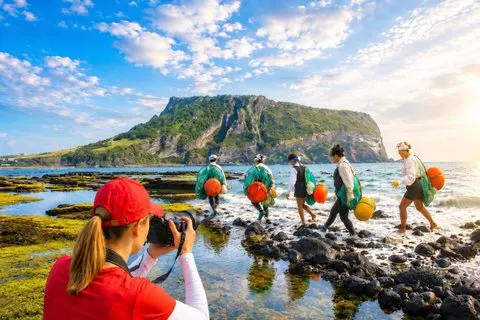
Woman diver performance time : 2:00pm Every day play time is 2:00pm only The Haenyeo performance is held every day at 2 o'clock. If the weather is bad or the sea level is too high, the Haenyeo performance is suddenly canceled. The Haenyeo performance is performed by four Jeju Haenyeo mothers (ages 70, 79, 81, and 82) who sing the song of Ieodo before going on a boat to work, and then perform a performance of catching abalone, conch, octopus, etc. in the water. Seongsan Ilchulbong was formed approximately 5,000 years ago by an underwater volcanic eruption on the seabed. Since then, it has undergone repeated coastal erosion caused by waves and sea breezes; in particular, the eastern coast facing the sea has been significantly eroded by strong waves, forming vertical cliffs. Seongsan Ilchulbong is a World Natural Heritage site and one of the top 10 scenic spots in Jeju. The round trip takes approximately 1 hour. If climbing is too difficult, you can also walk along the coast on the left.
· 2 h 30 minSeongeup Folk Village
It is a village where people have lived in traditional thatched houses since ancient times. In the past, Seongeup Village was the center of Jeju. In Seongeup Village, horses and cattle were sent to the king and the central government. in Seongeup Village. You can visit the traditional thatched houses for free. You can also see the appearance of a traditional toilet. In Seongeup Folk Village, take a walk along the stone wall alley. You can see the lifestyle of Jeju. You can also experience Hanbok at Seongeup Village. Traditional village and stone grand father and Traditional toilet information Dolhareubang is the guardian deity and symbol of Jeju. Wherever you go in Jeju, you can see Dolhareubang on both sides of the village entrance, and he is an old man who protects the village and its residents. Along with Jeju's traditional thatched houses, traditional toilets are no longer used and can be seen in many places to show off to tourists.
· 1 h· Admission includedJeju Island
It is time to go back to the accommodation after finishing the sightseeing taxi tour. We will drop you off at the location you started in the morning or around your accommodation.
· 30 min
Pickup
Pickup included.
Pickup points: Hotel, Place, Airport, Harbour (381 stops served).
Pickup about 10 min before departure.
You can specify your pickup location when booking.
Choose a pickup location
Hotel. Habor. Airport .Etc : We will hold a signboard with your name. ( phone board displaying with your name ) Returns to original departure point.
How to use your ticket
The bus tour starts from Jeju Airport. When the bus tour is confirmed, you will be notified in advance by e-mail. If the number of people recruited is less than 4, the tour may be canceled suddenly. For at least 4 people and less than 12 people Tours are conducted by taxi drivers without a licensed guide. If a group of 13 or more is recruited, a licensed guide and bus driver will conduct the tour. We will inform you of the waiting area for the tour bus at Jeju Airport. If the bus tour is confirmed, please come personally to the Jeju International Airport bus parking lot by taxi or bus. Please arrive 10 minutes before the bus tour departure time. And when going on a Small group tour If you wish to use additional time, For each additional hour, it costs 30.000 KRW (Regular taxi ), 40.000 KRW (jumbo taxi ), 50.000 KRW (mini bus ) If the number of people cannot be recruited, a taxi tour driver will pick the customer up from the hotel at 09:00 and take the taxi tour.
What to know before you go
- Infants are required to sit on an adult’s lap
- Not recommended for travelers with spinal injuries
- Not recommended for travelers with poor cardiovascular health
- Not recommended for pregnant travelers
- Public transportation options are available nearby
- Infants and small children can ride in a pram or stroller
- Wheelchair accessible
- Suitable for all physical fitness levels
- Seongsan Ilchulbong Information 2 The reason Seongsan Ilchulbong attracts millions of tourists every year is that it is by far the finest of Jeju's natural landscapes. Although it stands only 182 meters above sea level, the steep path leading to the summit is breathtaking. Upon reaching the summit, a wide, bowl-shaped crater comes into view in harmony with the sea, and the sunrise viewed from the top is said to be spectacular. Its original name was Seongsan (城山), meaning "castle mountain," because it stood towering like a castle; however, due to the beauty of the sunrise, the name Ilchulbong (日出峯), meaning "sunrise peak," was added, and it is now called Seongsan Ilchulbong. Unlike other oreums on Jeju Island, Seongsan Ilchulbong is a hydrovolcano formed by magma erupting from beneath the sea. As the hot magma erupted during volcanic activity, the volcanic ash absorbed seawater, causing the sedimentary layers to become sticky. This prevented the sediment from flowing down, causing it to accumulate along the steep slopes. Seongsan Ilchulbong is 5,000 years old, making it a very young mountain from a geological perspective. According to geological research, the tuff cone of Seongsan Ilchulbong clearly demonstrates the birth and growth process of a Surtseyan-type volcano, which erupted from a shallow seabed and grew above sea level. It is said that Seongsan Ilchulbong not only provides information on past volcanic activity and sedimentation but also offers a foundation for interpreting the eruption and sedimentation processes of various hydrovolcanoes forming in other parts of the world. It is said that the mountain was separated from the mainland in its early stages of formation, but sediments eroded by waves were pushed ashore, eventually connecting it to the Jeju mainland around 1940 with the construction of a road. At the summit is a crater measuring 600 meters in diameter and covering approximately 80,000 pyeong (about 264,000 square meters), shaped like a concave bowl. While farming was once practiced here, it is now entirely covered in silver grass. Around the rim of the crater, 99 small peaks stand out, revealing their teeth. According to legend, if Seongsan Ilchulbong had 100 peaks, ferocious beasts like tigers and lions would have appeared in Jeju; however, because there are ninety-nine, one short of the required number, neither tigers nor lions are said to have emerged. Seongsan Ilchulbong was managed as a local monument until it was designated as a natural monument on July 19, 2000. Recognized for its outstanding scenery and geological value, it was inscribed on the UNESCO World Natural Heritage List on July 2, 2007. In October 2010, it was certified as a UNESCO Global Geopark. It was also selected as a top natural ecotourism spot in Korea in 2011 and included in the Guinness World Records for Korea Tourism in December 2012. Jeju residents describe Seongsan Ilchulbong as the most beautiful scenery in Jeju. Located in the east of Jeju, Seongsan Ilchulbong appears as a massive rock fortress standing tall in a position that possesses an indescribable power of mystery. It can be seen that many Jeju people have lived lives believing in natural shamanistic deities such as stones and rocks.
- 한라산 정보 Hallasan Mountain information Hallasan, one of the three sacred mountains of the Korean Peninsula along with Jirisan and Geumgangsan in North Korea, is located at the southernmost tip of the Korean Peninsula and is the highest mountain in South Korea at 1,950m above sea level. It has a diverse vegetation distribution and is of great academic value as a treasure trove of flora and fauna. It was designated as Natural Monument No. 182, Hallasan Natural Reserve, on October 12, 1966. It was designated as a national park on March 24, 1970, and was designated as a UNESCO Biosphere Reserve in December 2002. Hallasan, a young volcanic island from the Quaternary Period of the Cenozoic Era, erupted volcanically until 25,000 years ago, and there are about 360 oreums around Hallasan, creating a unique landscape. The majestic appearance of Hallasan, towering over the center of the island, seems to contain a benevolent yet strong spirit. Hallasan in autumn foliage is a sight not to be missed, and Hallasan in snow is considered the most spectacular of all. The colorful natural scenery that changes without fail with the seasons makes visitors exclaim in awe. Hallasan and the beautiful land of Jeju, which preserve the mystery of the ancient times, are recognized as the greatest treasures given to us by God and as precious heritages that people around the world should nurture together. On June 27, 2007, Jeju Volcanic Island and Lava Tubes were registered as Korea's first UNESCO World Natural Heritage Site, and on October 4, 2010, they were certified as a World Geopark. You must make a reservation in advance to climb to the summit. The summit usually takes about 8 to 10 hours round trip and requires very strong physical strength. It is said that only by being kind to others and behaving beautifully with a good heart can you see the Baekrokdam Crater when climbing to the summit. According to a legend, A long time ago, a young hunter lived at the foot of Mt. Halla. He was caring for his sick mother, and because he was so devoted, he always wished to cure her illness. One day, a traveler passing by told him that deer blood was a special remedy for his mother's illness. The next day, he woke up early, bathed in the stream, and went out to hunt deer. After wandering around all day looking for deer, he ended up climbing to the top of Mt. Halla. The top was covered with thick fog, making it difficult to see ahead, but he did not give up and wandered through the fog until he finally found a deer. It was a white deer. He was so happy that he drew his bow in an instant and was about to release the bowstring when suddenly an old man with white hair appeared from somewhere, blocked the white deer, and soon disappeared into the thick fog with the deer.... Soon, when the fog began to clear, the hunter went down to the place where the old man and the white deer disappeared. There was only a large pond there, but no old man or deer. The old man was a god of Hallasan who guarded Baekrok. The hunter had no choice but to give up hunting the deer and instead brought water from the pond back to his mother to drink from the net. Then, something truly strange happened. The mother's long illness completely disappeared overnight.... Later, people called this pond Baekrokdam. It is said that this Baekrok is only visible to the most kind-hearted and filial people. Baekrok is white deer It is said that Baekrok still lives on Hallasan, and that those who see Baekrok are blessed with great luck and longevity. Baekrokdam Crater on the summit of Mt. Halla requires at least 4 hours of climbing to take photos around the summit. The highest mountain that towers over all of Jeju is Mt. Halla, and Jeju has 368 oreums and Mt. Halla. Oreum means straight mountain and means to climb.
- 제주 해녀 정보 2 Jeju Woman diver information Jeju Haenyeo Haenyeo are women who specialize in diving into the sea with their bare hands and without any machinery to collect seafood. The sea, the workplace and common fishing ground for haenyeo, has been called the sea field in Jeju. Since it is a volcanic island, farmland is rare, so Jeju people have cultivated the sea as a field. Haenyeo of Jeju are women who rely on the sea to collect abalone, conch, sea cucumber, cheoncho, hijiki, etc. to lead their livelihood. Substance technology is a skill acquired through long-term training and experience. Usually, from the age of 8, they learn to swim and dive in the shallow waters of the village, and become baby haenyeo around the age of 15. Haenyeo's material work requires a high degree of skill. You have to hold your breath and work for more than one minute while enduring strong water pressure in 15m of water. These skills, which are evaluated as ‘superhuman’, are obtained from each haenyeo’s sea and work experiences. This is possible only when the diving time is controlled by sensing the amount of water pressure and oxygen and estimating the distance to the surface. breathing sound Sumbisori is the sound that haenyeo make when they come out of the water to catch their breath after diving, and it sounds like whistling. It emits a ‘ho-oh-oh-oh-oh’ sound in the process of breathing out oxygen and exhaling the carbon dioxide generated in the body at once while diving for about 1 to 2 minutes. Haenyeo can breathe fresh air into their bodies in a short time through ‘Sumbi Sori’ and continue to practice even with a short break. Physical conditions require lung capacity, eyes and ears to withstand water pressure, the ability to withstand cold water, and the courage to not panic when encountering a large sea creature. Jeju haenyeo expanded their skills and wisdom by constantly receiving knowledge about the sea and effective use of physical strength in the sea at Bulteok from senior haenyeo. knowledge of nature Knowledge about nature refers to the marine knowledge and experience acquired about tides, winds, and harvested materials. Haenyeo are aware of the topography of the sea in the village, the flow of currents over time, and the habitats of marine life. In addition, it is possible to distinguish the growth process and collection period of marine organisms according to the season. In the case of agar-agar, the time to collect the best products is different every year, and the time to dig shellfish such as abalone and conch is also avoided during the spawning season. This knowledge of the marine ecosystem is steadily being handed down to Jeju haenyeo based on their long experience and accumulated knowledge. Haenyeo community Material work has a strong communal character. They do not arbitrarily jump into the sea and do things alone, but act according to the rules and laws that have been set. Also, when working with material things, they do not work alone, but work together, and when they are in trouble, they can jointly cope with dangerous situations. Haenyeo cannot exist apart from the group. The sea field, the workplace of haenyeo, is managed by the fishing village unit, which is a community of haenyeo. In Jeju Island, there are more than 100 fishing villages in village units, each of which strictly adheres to rules and regulations on the boundaries of fishing grounds, qualifications for harvesting seafood, harvesting methods and harvesting periods, etc. This is a promise to protect and coexist with the marine ecosystem. This haenyeo community shows the form of a meeting, and when a problem arises, the haenyeo make a decision after sufficient free discussion so that all members of the community can understand and accept it. The haenyeo community is divided into upper, middle, and lower groups according to material experience and skill. Among the sanggun, haenyeo with excellent skills, rich experience, wisdom and virtue are called the 'Dangsanggun' and are the leaders who lead the safety and harmony of the community. The sea is the field of haenyeo. When haenyeo enter the sea, they know in detail where there are rocks, fishing grounds, and a lot of seafood. Her daughter learned the field from her senior haenyeo and finally grew up as her sanggun. Since the village fishing ground is their own field, they clean the fishing ground and remove 'badang grass', a weed. Cleaning the fishing grounds two or three times a year.
- 제주도 information and 해녀(woman diver ) information. 1.. JEJU ISLAND Information Introduction Jeju Island, designated as Jeju Special Autonomous Province, lies southwest of the Korean Peninsula and is the largest tourist destination in Korea. The whole island was designated as a special tourist zone, and wherever tourists go, they can look upon beautiful scenery. Every year, about 8.7 million people from Korea and abroad visit this fascinating island that measures 73 kilometers across, east to west, and 31 kilometers, from north to south. Jeju Island earned the UNESCO triple crown, being designated as a World Natural Heritage, Global Geopark, and Biosphere Reserve as well as one of the Seven Wonders of Nature. The climate of Jeju is quite different from the temperate climate of mainland Korea. Since the island has a subtropical climate as well as a subarctic one, there are many peculiar plants that can only to be found on this island. The unique sight of Jeju Island captivates travelers. The scenery that represents this volcanic island of Jeju, such as Jusangjeolli Cliff (columnar joints on the coast) were created by Hallasan Mountain and Oreum (parasitic cones in Jeju dialect). The piedmont area that visitors encounter on their way from the beach to Hallasan Mountain is a gift of nature and the piedmont area on the way to Geomunoreum Volcanic Cone, where Jeju World Natural Heritage Center is located, is worth seeing. Another unique aspect here is the Jeju dialect and lifestyle. Traveling the 182-kilometer circuit road along the coastline by car, motor scooter or bike is recommended. There is a trail for walking called “Jeju Olle-gil” for those who choose to make a round trip on foot. Jeju Island is implementing more discretionary and diversified policies in politics and economy as well as tourism, and this is what makes Jeju worthy of the name “free international city.” Jeju Island is an island located in the southern sea of South Korea and is the largest island in South Korea. Jeju Island also belongs to Jeju Special Self-Governing Province in terms of administrative districts. The island has an area of 1,846 km². It is three times larger than Singapore. As of 2024, the population of Jeju is approximately 700,000. Jeju Island is an island created by a volcanic eruption under the sea. It is estimated to have been formed in four stages from 1.2 million years ago to 25,000 years ago. Small parasitic volcanoes were completed by a large eruption from 100,000 years ago to 25,000 years ago, forming 368 small parasitic volcanoes. Among them, Seongsan Ilchulbong and Sangumburi are representative attractions. The last volcanic activity is said to have occurred about 1,000 years ago on Biyangdo Island in Hyeopjae. Jeju Island was designated as a biosphere reserve by UNESCO on December 16, 2002 in recognition of its ecological value in terms of climate and biodiversity. In addition to Gapado, Hallasan, Seongsan Ilchulbong, and Geomunoreum Lava Tube System were recognized for their academic, cultural, tourism, and ecological value and importance, and were registered as a World Natural Heritage Site under the name of Jeju Volcanic Island and Lava Tubes in June 2007. On October 3, 2010, the UNESCO Global Geoparks Network (GGN) certified Jeju Island as a World Geopark. According to stories passed down from grandmothers, Jeju has a 100-year history as an island where Genghis Khan raised horses. In the past, residents lived around the beach and worked as haenyeo, and farming was prohibited around Hallasan and parasitic volcanoes, so the culture of the strong haenyeo who made a living by harvesting from the sea developed, and it has the world's best haenyeo culture. Even now, there are many horse pastures, and Genghis Khan's horses are still very numerous in Jeju. Only in Mongolia and Jeju are there Genghis Khan's horses.
- 제주돌문화공원 information Stone Culture Park is a museum and ecological park that comprehensively and systematically shows the stone culture of Jeju, the land of stones. The entire park will be created by 2020, and in the first stage, exhibition halls such as the Jeju Stone Museum, Jeju Stone Culture Exhibition Hall, and Jeju's traditional thatched roof were completed and opened on June 3, 2006, 7 years after the construction began. The Stone Culture Park, where you can see the stone culture of Jeju in one place, is so large that it is recommended to visit it with a leisurely schedule. The Stone Culture Park is located in front of Oreum, a unique natural heritage of Jeju, and if you follow the shape of a castle made of piled stones, you will reach the entrance of the Stone Culture Park with a cool view of the surroundings. Passing through the entrance and following the viewing path, you will come across various stone sculptures woven from the tale of Seolmundae Halmang and her son, General Oh Baek. Traditional village and stone grand father and Traditional toilet information Dolhareubang is the guardian deity and symbol of Jeju. Wherever you go in Jeju, you can see Dolhareubang on both sides of the village entrance, and he is an old man who protects the village and its residents. Jeju Island's Dolhareubang means "stone grandfather" and served as a guardian deity praying for the safety of the village. Jeju people also believe that Dolhareubang protects Jeju, and it is a representative symbol of Jeju. Along with Jeju's traditional thatched houses, traditional toilets are no longer used and can be seen in many places to show off to tourists. Traditional toilets have small pig houses and stone bowls where pigs eat food. Jeju residents actually used them until 1980, and since pigs would approach while people were doing their business in the toilet, people would always prepare sticks to eat the pigs that approached them. In the past, traditional toilets were used as fertilizer for the fields along with grass and pig excrement, and were very necessary for farming in rural areas. However, they are no longer used anywhere. In addition, Jeju people stack stones to get rid of bad energy, and stack stones to protect the safety and peace of their families and pray for their happiness. Jeju Stone Culture Park is a museum built by moving numerous stones and traces of volcanic activity from Jeju and traditional houses and lifestyles from the past. There is currently little activity looking for volcanic activity or ruins.
- 대한민국 information The English name is Republic of Korea. It extends 1,000 km to the south and borders China and Russia to the north. The total area of North and South Korea is similar to that of the United Kingdom or Romania, and South Korea is slightly larger than Hungary or Portugal and slightly smaller than Bulgaria. 70% of the entire country is mountainous, with a gentle slope toward the West Sea and a steep slope toward the East Sea. There are also many rivers compared to the area of the country. The climate has four distinct seasons, with long hot and humid summers and cold and dry winters, and relatively short refreshing and clear spring and fall days. The temperature drops to -15℃ in winter and rises to 34℃ in summer. The traditional religions of Korea are Shamanism, Buddhism, and Confucianism, and these have had a great influence on the cultural development, ideology, and behavior of past countries. In addition, the population of believers in the indigenous religion Cheondogyo, as well as foreign religions such as Christianity (Protestantism) and Catholicism, has been rapidly increasing since the modern era. The residents are Korean and ethnically Mongolian, and have existed as a single ethnic group since the Gojoseon period. After Gojoseon, our country continued through the Three Kingdoms period in ancient times, the North-South States period, the Goryeo period in the Middle Ages, and the Joseon period in the early modern times, but in 1910, our country lost its sovereignty for the first time in history due to Japanese colonial rule and was placed under colonial rule. Our people, who had been fighting for independence for a long time, finally achieved liberation when Japan was defeated in World War II. However, along with liberation, the armies of the victorious nations, the United States and the Soviet Union, entered the South and the North of the 38th parallel and implemented military administration, so although we were liberated from Japanese colonial rule, we were unable to achieve independence and instead ended up in a state of division between the South and the North. However, the Korean people’s desire for independence was reflected in the United Nations, and in 1947, the 2nd UN General Assembly proposed a simultaneous general election in both South and North Korea under the supervision of the UN Korean Supervisory Commission, but North Korea strongly opposed it. As a result, a general election was held only in South Korea on May 10, 1948, and the Constitutional Assembly was established on May 31. The Constitutional Assembly enacted and promulgated the “Constitution of the Republic of Korea” on July 17 (since the 9th amendment, the preamble to the Constitution of the Republic of Korea has stated that it “succeeds the legal tradition of the Provisional Government of the Republic of Korea”) and elected Syngman Rhee as the first president on the 20th of that month. Thus, the Republic of Korea declared its establishment domestically and internationally on August 15, 1948, and began as a member of the liberal democratic nation, and has continued to this day. The United Nations recognized the government of the Republic of Korea established in this way as the “only legitimate government on the Korean Peninsula.” When the Republic of Korea established its government, it defined its territory as the Korean Peninsula and its adjacent islands, and declared that the sovereignty of the Republic of Korea would govern the entire Korean Peninsula. However, the actual administrative area as a single political community was limited to the area south of the 38th parallel north latitude, and after the armistice in 1953, it was changed to the area south of the Military Demarcation Line. The current administrative area bordering the Military Demarcation Line is 99,720㎢, which is approximately 45% of the total area of the Korean Peninsula (222,58㎢). The capital of the Republic of Korea is Seoul, and administratively, it is divided into Seoul, 1 special autonomous city, 6 metropolitan cities, 2 special autonomous provinces, and 7 provinces. The total population was 41,975,000 in 1988, but as of 2015, it is 50,617,045, and the population density was 423 people/㎢ in 1988, but as of 2010, it is 485 people/㎢. The national language of the Republic of Korea is Korean, and the writing system is based on Hangul, but Chinese characters are used only when absolutely necessary. The currency is the won (won), the national flag is the Taegeukgi (太極旗), the national anthem is the Aegukga, and the national flower is the Mugunghwa (馬花).
- 해녀 노래에 대한 정보 Woman diver sing a song information The song of iyeodo Sana is a song that haenyeo sing while rowing their boats to work. It is also called 'iyeodo Sana' or 'Haenyeo Song'. It is a folk song of unknown author and is a type of work song that Jeju Island haenyeo sing when they go to and from the sea to do sea work. It is a song that soothes the sorrow and longing of haenyeo and is characterized by strong dialect and intonation, and the main content is the wish of sea women for an eternal utopia where there is no separation. The content of the lyrics is slightly different for each song and the rhythm is also diverse such as Gutgeori and Jungmori, but there is no big difference in the theme. The widely known lyrics of 《ieodo Taryeong》 are as follows. ieotsana iyeotsana iyeotsana iyeotsana Our ship goes well, smoothly, it's Solnam's ship It goes well, it's a rag-tag ship Let's go quickly, quickly Let's get to our destination Once our lives die We can't be reincarnated again Won's son Wonjarang Mara God's son Shinjarang Mara Sleeping on one pillow There's no place for Won or Shin to row The enemy is a single-log bridge No matter how hard you row, enemy, don't block the way Love is not an enemy. The lyrics of this song can be interpreted in modern language as follows. Iyeotsana, ieodosana, ieodosana, iyeodosana (the sound made when rowing)/Our ship goes well, smoothly floating, it's a pine ship/It goes well, it's a pine tree ship. Let's go quickly, let's go/Let's go forward to reach our destination. Once our lives die/We can't be reincarnated again. The son of the lord, do not boast about Won/The son of God, do not boast about God. After sleeping on the same pillow/There is nothing to fear from Won or God. The lord meets on a single-log bridge/What kind of road is the same road? Lord, do not block the road/I will not make love or enemies. The lyrics are direct and use a lot of repetition, so the intonation is strong and dynamic. It is a women's labor song that is only passed down on the coast of Jeju Island, and it well depicts the lives and sorrows of the haenyeo. The 'lord' in the lyrics refers to natural disasters such as storms, and the part where it says not to block the road shows the situation of the haenyeo who have to take responsibility for their own livelihood. In particular, the feelings of the haenyeo, who assume death, overlap with affection for men, and the hope that the sorrows of this world will be resolved in the afterlife is strongly expressed. The name 'iyeodo' was named after the motif of the 'Ieodo Tale', one of the traditional folk tales of the Jeju Island region. At the time of its discovery, it was called 'Parangdo', but in the late 1980s, the public and private sectors began to use the name 'Ieodo', and today, this name has become the official name. iyeodo (離於島, iyeodo) is an underwater reef located on the continental shelf of the East China Sea, southwest of Jeju Special Self-Governing Province. The top of Ieodo is 4.6m below the standard sea level, and it is said that it is often revealed only when the waves hit. It is said that female divers went to the vicinity of iyeodo and worked as female divers.
- 제주의 의미 와 지형 정보 Meaning of Jeju and Topographical Information Jeju is a place name referring to Jeju Island, and in Chinese characters, it is interpreted to mean 'a large town across the sea.' Jeju Island, located an hour's flight from Seoul, South Korea, is the largest island in the country. As the southernmost island of South Korea, it is closest to a subtropical climate. Due to its distance from the mainland, it possesses a unique culture distinct from other regions within the Korean Peninsula cultural sphere. Thanks to this, it is an indispensable region in the domestic tourism industry. As a side note, winters are, of course, cold. Be careful not to dress lightly just because it is a southern region, as you will be in for a rude awakening. It is a region where strong winds blow, so much so that it is called Samdado (Island of Three Abundances) because it is said to have an abundance of wind, stones, and women. Snow falls relatively heavily compared to Busan Metropolitan City, though not as much as on the West Coast or in the Gangwon Yeongdong region. This is because the northwest side is open to the sea, allowing humid winter snow clouds to blow directly in. Meaning of Jeju and Topographical Information Jeju is a place name referring to Jeju Island, and in Chinese characters, it is interpreted to mean 'a large town across the sea.' Due to the influence of these natural geography, the region boasts a wealth of unique cultural artifacts, including Dolhareubang and the Jeju dialect. It is also a place where Korean mythology has been well preserved. As briefly mentioned earlier, it is a central cultivation area for subtropical crops, including tangerines. In addition, it is famous for the name Samdado, which means "island of wind, stones, and women." However, this is a metaphorical expression. The hidden meaning implies that the land is not suitable for farming due to its abundance of stones and strong winds, and that there are many women because there are no men to farm, as many died at sea or were subjected to harsh treatment by mainlanders. In other words, the only thing Jeju Island has to offer is its tourism resources. In any case, it is a region truly worth researching for humanities scholars. The closest region to Jeju Special Self-Governing Province on the Korean Peninsula is Wando-gun, Jeollanam-do. The travel time is 1 hour and 20 minutes by high-speed ferry and 2 hours and 40 minutes by large car ferry, with a distance of 104 km. Because Jeju Island is a volcanic landscape, water does not accumulate and mostly seeps underground. Consequently, most streams on the island are dry. However, there are some streams that flow year-round due to the abundance of spring water, such as Gangjeongcheon, Sanjicheon, and Donghongcheon. Farming is predominantly dryland farming, with paddy cultivation accounting for a very small proportion. Jeju's soil is composed of weathered basalt and volcanic ash, making it a terrain that effectively lacks the ability to retain water. Jeju's bedrock consists of Precambrian gneiss and Mesozoic granite, similar to that of the Korean mainland; however, as one moves upward to the surface, basaltic zones formed by Cenozoic volcanic activity appear. Beneath Jeju, there exist various types of lava caves formed as lava erupted from Mt. Halla and parasitic volcanoes traveled toward the coast; Manjanggul Cave is a representative example. Regarding the fences of houses and stone walls around fields in Jeju, Traditionally, stone walls are built to define fields and around graves. Unlike the mainland, which is rich in granite, Jeju is characterized by an abundance of black and blue basalt, so the walls are constructed using basalt, creating an exotic landscape. The walls are built entirely with porous stones, without applying lime or soil. Surprisingly, this method is said to be well-suited to the windy environment of Jeju Island. It effectively blocks strong winds while allowing natural breezes to pass through, preventing the stone walls from collapsing and protecting the soil from erosion in the fields. This architectural style was developed due to the island's geographical location, where sea breezes, mountain winds, and even typhoons frequently blow. Jeju Island's industry is primarily composed of primary industries such as agriculture, fisheries, and livestock farming, as well as tertiary industries such as tourism and service sectors.
- 성읍민속마을 information It is a village where people have lived in traditional thatched houses since ancient times. In the past, Seongeup Village was the center of Jeju. In Seongeup Village, horses and cattle were sent to the king and the central government. in Seongeup Village. You can visit the traditional thatched houses for free. You can also see the appearance of a traditional toilet. In Seongeup Folk Village, take a walk along the stone wall alley. You can see the lifestyle of Jeju. You can also experience Hanbok at Seongeup Village. 전통초가와 돌하르방과 전통 화장실 정보 Traditional village and stone grand father and Traditional toilet information Dolhareubang is the guardian deity and symbol of Jeju. Wherever you go in Jeju, you can see Dolhareubang on both sides of the village entrance, and he is an old man who protects the village and its residents. Along with Jeju's traditional thatched houses, traditional toilets are no longer used and can be seen in many places to show off to tourists. Traditional toilets have small pig houses and stone bowls where pigs eat food. Jeju residents actually used them until 1980, and since pigs would approach while people were doing their business in the toilet, people would always prepare sticks to eat the pigs that approached them. In the past, traditional toilets were used as fertilizer for the fields along with grass and pig excrement, and were very necessary for farming in rural areas. However, they are no longer used anywhere. In addition, Jeju people stack stones to get rid of bad energy, and stack stones to protect the safety and peace of their families and pray for their happiness.
- Wheelchair access is not available inside Manjanggul Cave.
- Manjanggul Cave (Lava tube )is closed on the first Wednesday of every month.
- This activity can accommodate a maximum of 500 travelers.
- You will receive confirmation immediately when you book.
Travelers
1 traveler(s) minimum · 30 maximum per booking.
At least one adult required per booking.
Cancellation policy
For a full refund, cancel at least 24 hours before the scheduled departure time.
- From 1 days before : 100% refunded
- From 0 days before : 0% refunded
This activity can be canceled if there aren't enough participants.
Product code: 368769P46
Activity offered by Jeju K Tour(Jeju K Travel Agency Co., Ltd.) via Viator.