

Private Split Walking tour with a Photo session
1.2 k activities · Croatia
Split, Croatia, has 1,244 activities, tours and experiences to book. Don't miss: Diocletian's Palace, Salona, Cathedral of Saint Domnius, Croatian National Theatre in Split. Also worth exploring nearby: Ciovo Island, Trogir, Brac Island, Hvar.
01Things to do
Must-see places

Diocletian's Palace
Roman villa

Salona
Archaeological site

Cathedral of Saint Domnius
Catholic cathedral

Croatian National Theatre in Split
Theatre building

Marjan
Forest park

Temple of Jupiter, Split
Temple
02Activities to book
The best experiences in Split
 Selling fast
 Free cancellation
 Selling fast
 Top pick
 Selling fast
 Private tour
 Top pick
 Top pick
 Selling fast
 Top pick
 Selling fast
 Private tour
03Explore nearby
Nearby cities


Popular activities · Split
 Free cancellation
 Top pick
 Top pickSelling fastTop pick
 Top pick
 Top pick
 Top pick
 Top pick
 Top pick
 Top pick
 Top pick
 Top pick
 Top pick
 Top pick
 Top pick
 Top pick
 Top pick
 Top pick
 Top pick
 Free cancellation
 Free cancellationFree cancellation
 Private tour
 Free cancellation
 Private tour
 Private tour
 Selling fast
 Free cancellation
 Private tour
 Private tour
 Free cancellation
 Private tour
 Free cancellation
 Private tour
 Free cancellation
 Private tour
 Private tour
 Private tour
 Free cancellation
 Free cancellation
 Private tour
 Private tourPrivate tour
 Private tour
 Private tour
 Free cancellation
 Free cancellation
 Private tour
 Private tour
 Free cancellation
 Private tour
 Free cancellation
 Private tourSelling fast
 Free cancellation
 Free cancellation
 Free cancellation
 Free cancellation
 Free cancellation
 Private tour
 Private tour
 Selling fast
 Free cancellation
 Free cancellation
 Free cancellation
 Private tour
 Free cancellation
 Deal
 Free cancellation
 Private tour
 Private tour
 Private tour
 Private tour
 Private tour
 Free cancellation
 Private tour
 Deal
 Top pick
 Skip the line
 Top pick
 Free cancellation
 Selling fast
 Free cancellation
 Top pick
 Top pick
 Free cancellation
 Top pick
 Selling fast
 Top pick
 Top pick
 Free cancellation
 Top pick
 Top pick
 Top pick
 Top pick
 Top pick
 Top pick
 Selling fast
 Top pick
 Top pick
 Top pick
 Top pick
 Top pick
 Top pick
 Top pick
 Private tour
 Free cancellation
 Free cancellation
 Free cancellation
 Free cancellation
 Private tour
 Free cancellation
 Free cancellation
 Free cancellation
 Free cancellation
 Free cancellation
 Free cancellation
 Free cancellation
 Free cancellation
 Free cancellation
 Free cancellation
 Free cancellation
 Free cancellation
 Free cancellation
 Private tour
 Free cancellation
 Free cancellation
 Free cancellation
 Skip the line
 Free cancellation
 Private tour
 Private tour
 Private tour
 Free cancellation
 Private tour
 Private tour
 Private tour
 Private tour
 Free cancellation
 Free cancellation
 Free cancellation
 Free cancellation
 Free cancellation
 Free cancellation
 Private tour
 Free cancellation
 Private tour
 Private tour
 Free cancellation
Frequently asked questions about Split
What is there to do in Split?
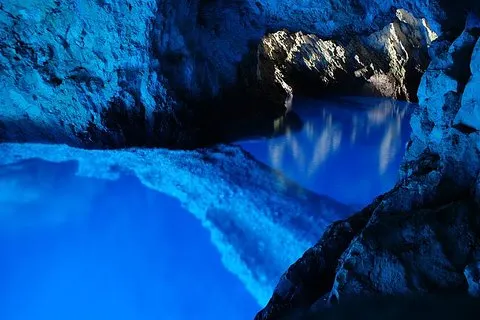
Split has 1,244 activities, tours and day trips you can book online. Among the most booked: « Blue Cave, Mamma Mia and Hvar, 5 Islands Speed boat Small group », « Split And Trogir Half Day Small Group Tour W Cruise Ship Drop Off », « Split Food Tour: Discover Split One Bite At A Time ».
What are the top-rated activities in Split?
According to traveller reviews: « Private Split Boat Tour with a Local Expert - fully customizable » (5.0/5, 28 reviews) ; « Split Walking Tour with Professor of History » (5.0/5, 1,405 reviews) ; « Split and Trogir Private Tour Ideal for Cruise Ship Guests » (5.0/5, 256 reviews).
What are the must-see places in Split?
Not to be missed in Split: Diocletian's Palace, Salona, Cathedral of Saint Domnius, Croatian National Theatre in Split, Marjan, Temple of Jupiter, Split.
Can you cancel an activity in Split for free?
Usually, yes: 24 of the 24 most popular activities in Split offer free cancellation. The exact terms are shown on each activity page before you book.
What is there to visit near Split?
Close to Split: Ciovo Island, Trogir, Brac Island, Hvar, Šibenik, Makarska.
Private Split Walking tour with a Photo session
Historical toursWalking toursPrivate toursArchaeology tours
Duration
2 h 30 min
Language
English
Guidance
Guide
Group
Private activity
Booking
Instant confirmation
Lead time
Book up to 2 days before departure
Ticket
Mobile or paper ticket accepted
Tickets
One per booking
Cancellation
Free cancellation available
Overview
Join me on a journey of 1700 years as we explore together the fascinating history of the Unesco city of Split. We will walk on the footsteps of the emperor Diocletian and you will get to know how did a Roman villa of a retired emperor become a live city.
What's included
- ✓Private professional lifestyle photographer Ivan Gudić.
- ✓Live guide
Not included
- ✕Lunch
- ✕Admission to Cathedral of Saint Domnius, Temple of Jupiter and The Crypt of Saint Lucy is 25KN
Available options
Choose your option when you book.
Private Split Walking tour with a Photo session
from €200Itinerary
Riva Harbor
We start our tour at the Riva promenade - the most important public space in the Split. Riva represents something far more then just a nice waterfront. It is a genuine living room for us locals. It is a stage for numeros concerts and events throughout the entire year.The waterfront is a central place to celebrate New Year, Christmas, City Day, Carnival and many other events. The Promenade is 250m long and 55m wide and it offers numerous coffee shops and restaurants where you can relax and enjoy the sea view. We are start the tour at the very beginning of Riva near a bronze model of the city of Split.
· 10 minPalais de Dioclétien
Our next stop is the Diocletian Palace. The Palace is one of the best preserved monuments of the Roman architecture in the world. The Emperor's Palace was built as a combination of a luxury villa - summer house and a Roman military camp (castrum), divided into four parts with two main streets. Southern part of the Palace was, in this scheme, intended for the Emperor's apartment and appropriate governmental and religious ceremonies, while the north part was for the Imperial guard - the military, servants, storage etc. The Palace is a rectangular building (approximately 215 x 180 meters) with four large towers at the corners, doors on each of the four sides and four small towers on the walls.
· 30 minVestibulum of Diocletian's Palace
From the outside rectangular, and from the inside circular ground plan of this old imperial court, Vestibule leaves a monumental impression even to this day. And how fascinating was it in its original entirety: semicircular niches with statues; a large cupola with colourful glittery mosaic, witnessed by Marko Marulić in his manuscript from the 16th century; the whiteness of the round wall. Vestibule was used to enter the residential part of the palace. But can you imagine that little over half a century ago it was used for living, and that the residents kept poultry there and cultivated gardens? Vestibul is today appreciated for its outstanding acoustics. You will be amazed by the sounds of man groups who sing traditional dalmatian a capella songs.
· 10 minCathedral of Saint Domnius
Among the European cathedrals the one in Split finds its seat in the oldest building - the Mausoleum of the Roman Emperor Diocletian. Inside the cathedral, at the end of the second millennium, the history reconciles ancient pagan, Christian Medieval and modern heritage. Mausoleum of the Emperor - persecutor of Christians becomes a cathedral in the 7th century where altars with relics of St Domnius and St Anastasius, martyrs executed in the nearby Solin, take an honorary place. Cathedral today is primarily a place of liturgy, with a millennium long continuity, best reflected in the Sunday mass and the renewed splendour of the procession on the St Domnius's day - the day of Split's patron saint. The renowned part of the Cathedral are its gates carved in walnut by Andrija Buvina from Split. Admission for the Cathedral is 25 Croatian kuna or 3.5 euros and it includes also the entrance to the Temple of Jupiter and the Crypt of St.Lucy.
· 15 min· Admission includedStatue de Grgur Ninski
Located outside the Golden Gate, one of four principal Roman gates into Diocletian’s Palace, is a statue of Gregory of Nin. He was a medieval bishop, famous for defying the Catholic church in Rome and insisting they introduce the national Croatian language into Catholic services throughout Croatia. As a result, everyone could understand what was being said. Before, services were only held in Latin. Christianity ultimately grew stronger throughout the country. The statue was crafted by renowned Croatian sculptor, Ivan Meštrović, in 1929 to commemorate one thousand years since Gregory of Nin historically defended the Croatian culture. It is said to rub his big toe will grant you your wish!
· 10 minNarodni Trg
Pjaca (People's Square, another square nobody in Split calls by its real name), is first mentioned in 13th century as St. Lawrence's Square, and it was the first inhabited part of Split outside the Diocletian Palace, leaning to its western wall. Already for centuries the Pjaca is the central stage of the city life, there in the Gothic building of the Old Town Hall, today an exhibition centre, was the seat of the city's authority, and in still beautiful and preserved Palaces on the outskirts of the Pjaca lived the noble families Cambi, Pavlović, Nakić, Ciprianis, Karepić. Every building on Pjaca has its story, each is a witness of history and the spirit of the city. As it was yesterday, it is also today, when Pjaca is filled with numerous bars, restaurants and shops, and when it became one of the most important spots for tourists wishing to enjoy in whatever it is that their hosts, citizens of Split, are enjoying.
· 15 minFruit's Square (Trg Brace Radic)
There are several landmarks decorating this not so large a square thriving with city life in bars, restaurants and exclusive shops, a venue often used also by fairs. The biggest is certainly the octagonal Venetian tower, the leftover of the former fortress, built in the 15th century for the defence of, at the time, a small town. Opposite the tower is a magnificent Palace of the old family Milesi from the 17th century with a spectacular Baroque facade, one of the best examples of that style in the whole of Dalmatia. Just in front of it stands the monument to the father of the Croatian literature, the citizen of Split, Marko Marulić, who was one of the most important philosophers and intellectuals of the 15th century. The author of the monument, as well as of several others in the city is Ivan Meštrović.
· 10 minProkurative
Prokurative or as they are officially called, Republic Square resemble the Venice St. Marks Square. They are located west of the Riva and they were named after the arches found on the neo-Renaissance buildings surrounding the square on three sides. The building of the Prokurativa was initiated by one of the most renowned mayors in the history of the city Antonio Bajamonti in the mid 19th century. He wanted to show that Split supported Italian tradition with all its might. Hence the colonnade resembling Venetians, and reliefs above the windows evoking the ancient and Renaissance influences. Bajamonti also made his great theatre on the square, but it was destroyed by a fire. The square has long been established as an excellent stage for cultural events, especially the pop music festival, and the local bars and restaurants made it a popular venue for the citizens of Split.
· 10 min
Meeting point
The return is at the same place.
What to know before you go
- Service animals allowed
- Public transportation options are available nearby
- Infants are required to sit on an adult’s lap
- Suitable for all physical fitness levels
- You will receive confirmation immediately when you book.
Travelers
1 traveler(s) minimum · 7 maximum per booking.
Cancellation policy
For a full refund, cancel at least 24 hours before the scheduled departure time.
- From 1 days before : 100% refunded
- From 0 days before : 0% refunded
This activity can be canceled in case of bad weather or if there aren't enough participants.
Reviews
Product code: 275972P3
Activity offered by Costumed Tours via Viator.