

Private Tours: A Journey through the Ancient Rome
246 activities · Italy
Vatican City, Italy, has 246 activities, tours and experiences to book. Don't miss: Colosseum, St. Peter's Basilica, Sistine Chapel, Pantheon. Also worth exploring nearby: Rome, Lake Bracciano, Isola d'Ischia.
01Things to do
Must-see places

Colosseum
Stadium

St. Peter's Basilica
Parish church

Sistine Chapel
Chapel

Pantheon
Roman temple

Stadio Olimpico
Olympic stadium

Roman Forum
Square
02Activities to book
The best experiences in Vatican City
 Free cancellation
 Free cancellation
 Skip the line
 Skip the line
 Bestseller
 Free cancellation
 Skip the line
 Top pick
 Skip the line
 Free cancellation
 Skip the line
 Skip the line
03Explore nearby
Nearby cities


Popular activities · Vatican City
- Visite guidée de la basilique Saint-Pierre avec accès au tombeau papal
- Vatican Museums and Sistine Chapel Entry Tickets
- Vatican Museums & Sistine Chapel Admission Ticket
- Skip the Line : Ticket to the Vatican Museum & sistine chapel,
- Fast Track Entry Vatican Museums and Sistine Chapel
- Musées du Vatican & Chapelle Sixtine Visite guidée
- Musée du Vatican et chapelle Sixtine
- Basilique Saint-Pierre de la Cité du Vatican avec Guide audio multilingue
- Basilique St Peters, entrée souterraine et coupole avec application audio
- Séance photo professionnelle à Rome avec un photographe local
- Rome: Vatican Museum & Sistine Chapel Reserve Tickets
- Entrée Prority Basilique Saint-Pierre avec Audioguide
- Skip the Line Vatican Museum and Sistine Chapel Entry Ticket
- Billet d'entrée coupe-file pour la basilique Saint Peters
- Vatican Museums and Sistine Chapel Skip The Line Priority Ticket
- Rome: St. Peter's Basilica Priority Access + Audio guide
- Skip the Line : Ticket to the Vatican Museum & sistine chapel,
- Accès aux Musées du Vatican et à la Chapelle Sixtine sans file d'attente
- Musée du Vatican et chapelle Sixtine Billets coupe-file
- St. Peter's Basilica Hosted Entrance and Digital Audioguide
- Vatican Museums & Sistine Chapel Skip The Line Entry Ticket
- Vatican Museums and Sistine Skip-the-Line Tickets with Dedicated Host
- Vatican Museum access without a tour guide
- Vatican Museums and Sistine Chapel Skip-the-Line Tickets
- Billet Musée du Vatican & Chapelle Sixtine avec coupe-file
- Rome: St. Peters Basilica, Dome and Catacombs Entry & Audio Guide
- Vatican Museums & Sistine Chapel Skip-the-Line Entry Ticket
- Vatican Museum and Sistine Chapel Skip the Line Ticket
- Rome: Vatican Pass plus Top Attractions and Transport
- Skip The Line ticket to the Vatican Museums & the Sistine Chapel
- Visite coupe-file des musées du Vatican et de la chapelle Sixtine
- Skip the Line: Ticket to the Vatican Museum & Sistine Chapel
- Rome: St. Peter's Basilica & Dome Entry Ticket with Audio Guide
- Visite partagée en petit groupe de Rome au départ de Civitavecchia : 8 personnes maximum
- Excursion privée de luxe d'une journée à Rome au départ du port de Civitavecchia
- Vatican Museums and Sistine Chapel Tickets
- Visite privée personnalisable de 4 heures de Rome en voiturette de golf
- Cité du Vatican Basilique Saint-Pierre Entrée réservée et Audio Guide
- Privé : Musées du Vatican, Chapelle Sixtine&St Peter's
- Excursion en bord de mer vers Rome au départ du port de Civitavecchia
- Just Ticket - Vatican Museum and Sistine Chapel Fast track
- Visite des musées du Vatican avec la chapelle Sixtine | Semi-privé et privé
- Vatican Museums: Skip the Line Tickets with Escorted Entrance
- German Petersdomführung
- Vatican Museums and Sistine Chapel Skip the line Ticket
- Musées du Vatican & Chapelle Sixtine Billet coupe-file + Audioguide
- Rome : Musées du Vatican et chapelle Sixtine Entrée rapide - Guide facultatif
- Expérience privée: Vatican avec la Chap. Six. + Cham. de Raphaël
- Musées du Vatican et Chapelle Sixtine – Audio Guide | Visit Upgrade
- Musées du Vatican coupe-file et expérience de la chapelle Sixtine
- Rome : Visite guidée du Colisée – Forum Romain et Colline Palatine
- Vatican : Billet coupe-file Basilique Saint-Pierre et coupole
- Skip the Line: Vatican Museums and Sistine Chapel Fast Track Admission Ticket
- Skip-the-Line Tickets to Vatican Museum and Sistine Chapel
- Musée du Vatican, visite de la chapelle Sixtine avec accès à la basilique Saint-Pierre
- Visite guidée du Vatican et du Colisée
- Vatican Museums and Sistine Chapel with Skip The Line Ticket
- Vatican and Sistine Chapel SemiPrivate Tour with St.Peter's Entry
- St Peter's Basilica and Cupola guided tour
- Visite guidée privée de l'histoire de Rome et du Vatican ancien
- Vatican VIP Experience
- Entrance to Vatican Museums and Sistine Chapel
- Visite privée des musées du Vatican et de la chapelle Sixtine avec entrée rapide.
- Excursion privée d'une journée au pays des vins de Toscane au départ de Rome avec déjeuner
- Vatican SKIP THE LINE Tickets
- Musée du Vatican & Chapelle Sixtine Entrée réservée
- Vatican City skip the line With ticket
- Skip-the-Line Entry Tickets: Vatican Museum & Sistine Chapel
- Billet d'entrée à la basilique Saint-Pierre et aux tombeaux pontificaux
- Skip The Line entry ticket Vatican Museums and Sistine Chapel
- Reserved Papal Audience Ticket with Assistance On Site
- Vatican Museum and Sistine Chapel Skip-the-Line Guided Group Tour and tickets
- Visite à pied de Rome
- Skip The Line Ticket Vatican Museum and Sistine Chapel Entry
- Vatican Early Tour: Museums & Sistine Chapel Guided Tour
- Excursion privée à terre du port de Civitavecchia à Rome et au Vatican
- Visite coupe-file des musées du Vatican et de la chapelle Sixtine
- Visite portuaire d'une journée à Rome (chauffeur seul/autotouriste)
- Celebrate Ancient Jubilee in Rome in the 4 Papal Basilicas
- Musées du Vatican et chapelle Sixtine Billets coupe-file
- Vatican City Private Tour with Hotel Pick up
- Rome: Vatican Museum and Sistine Chapel Reserved Entry
- St. Peter's Basilica Reserved Entry with Audioguide
- Entrée express de la basilique Saint-Pierre avec guide audio Vatican
- Visite privée du Vatican avec chapelle Sixtine et basilique Accès rapide
- Rome: St. Peter's Basilica Skip-the-Line Entry Ticket
- Principaux attraits de Rome Excursion privée depuis le port de Civitavecchia
- Self Guided Vatican Museums Fast Track Ticket
- Fast Track Tickets: Sistine Chapel & Vatican Museums
- Vatican Museum & Sistine Chapel Fast-track entry Tickets
- Musées du Vatican, chapelle Sixtine et basilique Saint-Pierre Visite guidée
- Vatican: Museums & Sistine Chapel Skip-the-Line Ticket
- Basilique vaticane Saint-Pierre et tombeaux des papes
- Vatican City: Museums and Sistine Chapel Skip The Line Ticket
- Limo Shore Excursion from Civitavecchia Port to Rome
- Saint Peter's Basilica Semiprivate Tour with privileged access
- Entrée réservée de la basilique Saint-Pierre et dôme avec ascenseur
- Vatican Museums and Sistine Chapel Skip the Line Tickets
- Angels and Demons on the Illuminati Path Small Group Tour in Rome
- Entry Tickets Sistine Chapel And Vatican Museum
- Rome Vatican Museum & Sistine Chapel Private Tour | VIP Entrance
- The Ultimate Basilica Tour with Dome & Crypts | Small Group
- Vatican Museum and Sistine Chapel Entrance Tickets
- Private Half-Day Vatican Guided Tour
- Dome Climb & St. Peter's Basilica Private Tour
- Visite privée VIP : musées du Vatican, chapelle Sixtine
- Musées du Vatican et chapelle Sixtine Billet coupe-file
- Musées du Vatican & Chapelle Sixtine - Billet d'entrée
- Visite privée après la croisière du port de Civitavecchia à Rome
- Visite des musées du Vatican et de la Chapelle Sixtine, accessibles aux personnes en fauteuil roulant
- Private Rome Shore Excursion from Civitavecchia
- Vatican Museum and Sistine Chapel Hosted Entrance
- Rome: Vatican Museum & Sistine Chapel Entry Experience
- Semiprivate Guided Tour Vatican Museum & Sistine Chapel
- Visite guidée privée en soirée du Vatican et de la chapelle Sixtine à accès rapide
- Visite du Vatican avec la chapelle Sixtine de Michel-Ange et accès rapide
- Unique Rome, Churches, Angels and Art Photo Tour and Workshop
- Guided Tour Sistine Chapel & Vatican Museums Skip the Line entry
- Sistine Chapel Express and St Peter Basilica
- St. Peters Square & Basilica Vatican Walking Tour with Audioguide
- St. Peter’s Basilica: Self-guided Audio Tour on your Phone (without ticket)
- Vatican Museums & Sistine Chapel Guided Tour
- Vatican Museums & Sistine Chapel VIP Tour
- Entrée de la basilique Saint-Pierre avec accès au dôme
- Visite privée de Rome en une journée avec les musées du Vatican et transfert en taxi
- Visite du Vatican, de la chapelle Sixtine et de Saint-Pierre en formule tout compris pour les enfants
- Évitez les files d'attente Visite guidée privée avec le Vatican et la chapelle Sixtine
- Vatican Museums & Sistine Chapel Guided Tour With Skip The Line
- Dîner croisière orchidée blanche à Bangkok avec Pickup et musique live
- Rome : Visite privée exclusive des musées du Vatican
- Galerie Borghèse coupe-file avec audio Guide
- Vatican Museums and Sistine Chapel Early Morning Entry Tickets
- Last-Minute Skip-the-Line Vatican Museums & Sistine Chapel
- Visite privée VIP de Rome et du Vatican depuis Civitavecchia
- Visite privée des musées du Vatican et de la chapelle Sixtine
- Entrée Privilégiée de la Basilique Saint-Pierre avec Guide Audio Gratuit
- Vatican Museums Guided Tour with Sistine Chapel
- Vatican Museums and Sistine Chapel Tour with optional Audioguide
- Sistine Chapel Vatican Museums and Galleries Guided Tour
- Shore Excursion From Civitavecchia Port
- Visite privée de la chapelle Sixtine avec d'autres sites incontournables du Vatican
- Excursion privée à terre à Rome depuis le port de Civitavecchia
- Visite privée de la basilique Saint-Pierre avec accès privilégié
- Visite de Michel-Ange à Rome: Pietà, Basilique Saint-Pierre & Dôme
- Visite de la ville de Rome depuis le port de Civitavecchia en croisière
- Family Friendly Private Vatican & Sistine Chapel Tour
- Guided Tour to Vatican and Sistine Chapel with Ticket
- Vatican Museums and Sistine Chapel Tickets
- Rome Sistine Chapel and Vatican Museums Guided Tour
- Private Tours: A Journey through the Ancient Rome
Frequently asked questions about Vatican City
What is there to do in Vatican City?
Vatican City has 246 activities, tours and day trips you can book online. Among the most booked: « Skip-The-Line Vatican Museums,Sistine Chapel & Optional Basilica », « Vatican Museums, Sistine Chapel & St. Peters Basilica Guided Tour », « Vatican Museums and Sistine Chapel Skip The Line Entry Ticket ».
What are the top-rated activities in Vatican City?
According to traveller reviews: « 4-Hour Private Customizable Tour of Rome by Golf Cart » (4.9/5, 256 reviews) ; « Rome Small-Group Shared Tour from Civitavecchia: 8 People Max » (4.9/5, 472 reviews) ; « Skip-the-line Private: Vatican Museums, Sistine Chapel&St Peter's » (4.9/5, 211 reviews).
What are the must-see places in Vatican City?
Not to be missed in Vatican City: Colosseum, St. Peter's Basilica, Sistine Chapel, Pantheon, Stadio Olimpico, Roman Forum.
Can you cancel an activity in Vatican City for free?
Usually, yes: 18 of the 24 most popular activities in Vatican City offer free cancellation. The exact terms are shown on each activity page before you book.
What is there to visit near Vatican City?
Close to Vatican City: Rome, Lake Bracciano, Isola d'Ischia.
Private Tours: A Journey through the Ancient Rome
Duration
4 h
Language
English
Guidance
Audio guide
Group
Private activity
Booking
Instant confirmation
Lead time
Book up to 12 h before departure
Ticket
Mobile or paper ticket accepted
Tickets
One per booking
Cancellation
Free cancellation available
Overview
Travel by comfortable Mercedes car or minivan with air conditioning through Rome to see the city's famous monuments and beautiful squares. See St. Peter's Basilica, Navona Square, the Colosseum, the Roman Forum, the Pantheon, the Spanish Steps, the Trevi Fountain, and Popolo Square. Explore the magnificent Eternal City in one comfortable half-day tour. Enjoy pick-up at your hotel or other accommodation in Rome by a private driver. You will enjoy a wonderful journey through Ancient Rome.
What's included
- ✓Hotel pickup and drop-off
- ✓Private tour
- ✓Transport by air-conditioned minivan or coach
- ✓Fuel surcharge
Not included
- ✕Food and drinks
- ✕Tickets/entrance fees for attractions
- ✕Tour guide
- ✕Gratuities
- ✕Please note, a tour guide and tickets for attractions are not included in the price
Available options
Choose your option when you book.
Tour Ancient Rome 4 pax
from 65 €Explore the magnificient eternal city on a comfortable half day tour, collected at your hotel by a private driver. You will enjoy a wonderful journey through cristian Rome Pickup included
Tour Ancient Rome 6 pax
from 48 €Explore the magnificient eternal city on a comfortable half day tour, collected at your hotel by a private driver. You will enjoy a wonderful journey through cristian Rome Pickup included
Tour Ancient Rome 8 pax
from 28,13 €Explore the magnificient eternal city on a comfortable half day tour, collected at your hotel by a private driver. You will enjoy a wonderful journey through cristian Rome Pickup included
Tour Ancient Rome 3 pax
from 80 €Explore the magnificient eternal city on a comfortable half day tour, collected at your hotel by a private driver. You will enjoy a wonderful journey through cristian Rome Pickup included
Tour Ancient Rome 5 pax
from 55 €Explore the magnificient eternal city on a comfortable half day tour, collected at your hotel by a private driver. You will enjoy a wonderful journey through cristian Rome Pickup included
Tour Ancient Rome 1 pax
from 250 €Explore the magnificient eternal city on a comfortable half day tour, collected at your hotel by a private driver. You will enjoy a wonderful journey through cristian Rome. Pickup included
Tour Ancient Rome 2 pax
from 125 €Explore the magnificient eternal city on a comfortable half day tour, collected at your hotel by a private driver. You will enjoy a wonderful journey through cristian Rome Pickup included
Tour Ancient Rome 7 pax
from 31,25 €Explore the magnificient eternal city on a comfortable half day tour, collected at your hotel by a private driver. You will enjoy a wonderful journey through cristian Rome Pickup included
Itinerary
Piazza Navona
Defined as a public space in the last years of 15th century, when the city market was transferred there from the Campidoglio, Piazza Navona was transformed into a highly significant example of Baroque Roman architecture and art during the pontificate of Innocent X, who reigned from 1644 until 1655, and whose family palace, the Palazzo Pamphili, faced the piazza. It features important sculptural creations: in the center stands the famous Fontana dei Quattro Fiumi or Fountain of the Four Rivers (1651) by Gian Lorenzo Bernini, topped by the Obelisk of Domitian, brought in pieces from the Circus of Maxentius;[2] the church of Sant'Agnese in Agone by Francesco Borromini, Girolamo Rainaldi, Carlo Rainaldi and others; and the aforementioned Pamphili palace, also by Girolamo Rainaldi, that accommodates the long gallery designed by Borromini and frescoed by Pietro da Cortona.[3]
· 30 minFontaine de Trevi
The fountain at the junction of three roads (tre vie)[3] marks the terminal point[4] of the "modern" Acqua Vergine, the revived Aqua Virgo, one of the aqueducts that supplied water to ancient Rome. In 19 BC, supposedly with the help of a virgin, Roman technicians located a source of pure water some 13 km (8.1 mi) from the city. (This scene is presented on the present fountain's façade.) However, the eventual indirect route of the aqueduct made its length some 22 km (14 mi). This Aqua Virgo led the water into the Baths of Agrippa. It served Rome for more than 400 years
· 30 minPlace Saint Pierre
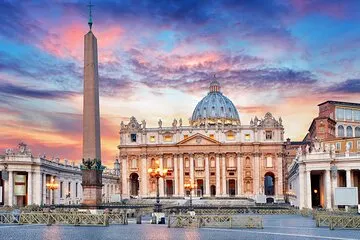
he Papal Basilica of St. Peter in the Vatican (Italian: Basilica Papale di San Pietro in Vaticano), or simply St. Peter's Basilica (Latin: Basilica Sancti Petri), is a church built in the Renaissance style located in Vatican City, the papal enclave which is within the city of Rome. Designed principally by Donato Bramante, Michelangelo, Carlo Maderno and Gian Lorenzo Bernini, St. Peter's is the most renowned work of Renaissance architecture[2] and the largest church in the world.[3] While it is neither the mother church of the Catholic Church nor the cathedral of the Diocese of Rome, St. Peter's is regarded as one of the holiest Catholic shrines. It has been described as "holding a unique position in the Christian world"[4] and as "the greatest of all churches of Christendom
· 1 hPiazza del Popolo
Piazza del Popolo is a large urban square in Rome. The name in modern Italian literally means "People's Square", but historically it derives from the poplars (populus in Latin, pioppo in Italian) after which the church of Santa Maria del Popolo, in the northeast corner of the piazza, takes its name. The piazza lies inside the northern gate in the Aurelian Walls, once the Porta Flaminia of ancient Rome, and now called the Porta del Popolo. This was the starting point of the Via Flaminia, the road to Ariminum (modern-day Rimini) and the most important route to the north. At the same time, before the age of railroads, it was the traveller's first view of Rome upon arrival. For centuries, the Piazza del Popolo was a place for public executions, the last of which took place in 1826.
· 20 minPanthéon
The Pantheon (UK: /ˈpænθiən/, US: /-ɒn/;[1] Latin: Pantheum,[nb 1] from Greek Πάνθειον Pantheion, "[temple] of all the gods") is a former Roman temple, now a church, in Rome, Italy, on the site of an earlier temple commissioned by Marcus Agrippa during the reign of Augustus (27 BC – 14 AD). It was completed by the emperor Hadrian and probably dedicated about 126 AD. Its date of construction is uncertain, because Hadrian chose not to inscribe the new temple but rather to retain the inscription of Agrippa's older temple, which had burned down.[2] The building is cylindrical with a portico of large granite Corinthian columns (eight in the first rank and two groups of four behind) under a pediment. A rectangular vestibule links the porch to the rotunda, which is under a coffered concrete dome, with a central opening (oculus) to the sky. Almost two thousand years after it was built, the Pantheon's dome is still the world's largest unreinforced concrete dome.[3] The height to the oculus and the diameter of the interior circle are the same, 43 metres (142 ft).[4]
· 20 minMarches Espagnoles
n the middle of the square is the famous Fontana della Barcaccia, dating to the beginning of the baroque period, sculpted by Pietro Bernini and his son, the more famous Gian Lorenzo Bernini. At the right corner of the Spanish Steps rises the house of the English poet John Keats, who lived there until his death in 1821: nowadays it has been changed into a museum dedicated to him and his friend Percy Bysshe Shelley, displaying books and memorabilia of English romanticism. At the left corner there is the Babington's tea room, founded in 1893.
· 20 minRoman Forum
The Roman Forum, also known by its Latin name Forum Romanum (Italian: Foro Romano), is a rectangular forum (plaza) surrounded by the ruins of several important ancient government buildings at the center of the city of Rome. Citizens of the ancient city referred to this space, originally a marketplace, as the Forum Magnum, or simply the Forum. For centuries the Forum was the center of day-to-day life in Rome: the site of triumphal processions and elections; the venue for public speeches, criminal trials, and gladiatorial matches; and the nucleus of commercial affairs. Here statues and monuments commemorated the city's great men. The teeming heart of ancient Rome, it has been called the most celebrated meeting place in the world, and in all history.[1] Located in the small valley between the Palatine and Capitoline Hills, the Forum today is a sprawling ruin of architectural fragments and intermittent archaeological excavations attracting 4.5 million or more sightseers yearly.
· 45 min
Pickup
Pickup included.
Pickup about 5 min before departure.
Choose a pickup location
hotel or addresses inside the city center
How to use your ticket
• The duration of transfers are approximate, the exact duration will depend on the time of day and traffic conditions Times are subject to change due to local traffic conditions.
What to know before you go
- Specialized infant seats are available
- Infants and small children can ride in a pram or stroller
- Service animals allowed
- Public transportation options are available nearby
- Suitable for all physical fitness levels
- The duration of transfers are approximate, the exact duration will depend on the time of day and traffic conditions
- Please select tour option that matches number of passengers for correct pricing
- You will receive confirmation immediately when you book.
Travelers
1 traveler(s) minimum · 8 maximum per booking.
At least one adult required per booking.
Cancellation policy
For a full refund, cancel at least 24 hours before the scheduled departure time.
- From 1 days before : 100% refunded
- From 0 days before : 0% refunded
Reviews
Product code: 14065P2
Activity offered by Cab Rome via Viator.